

by Dr Jay Venketramen, Consultant Pediatrician
In a world where misinformation spreads faster than truth, it’s easy for parents to feel overwhelmed — especially when it comes to making decisions during pregnancy.
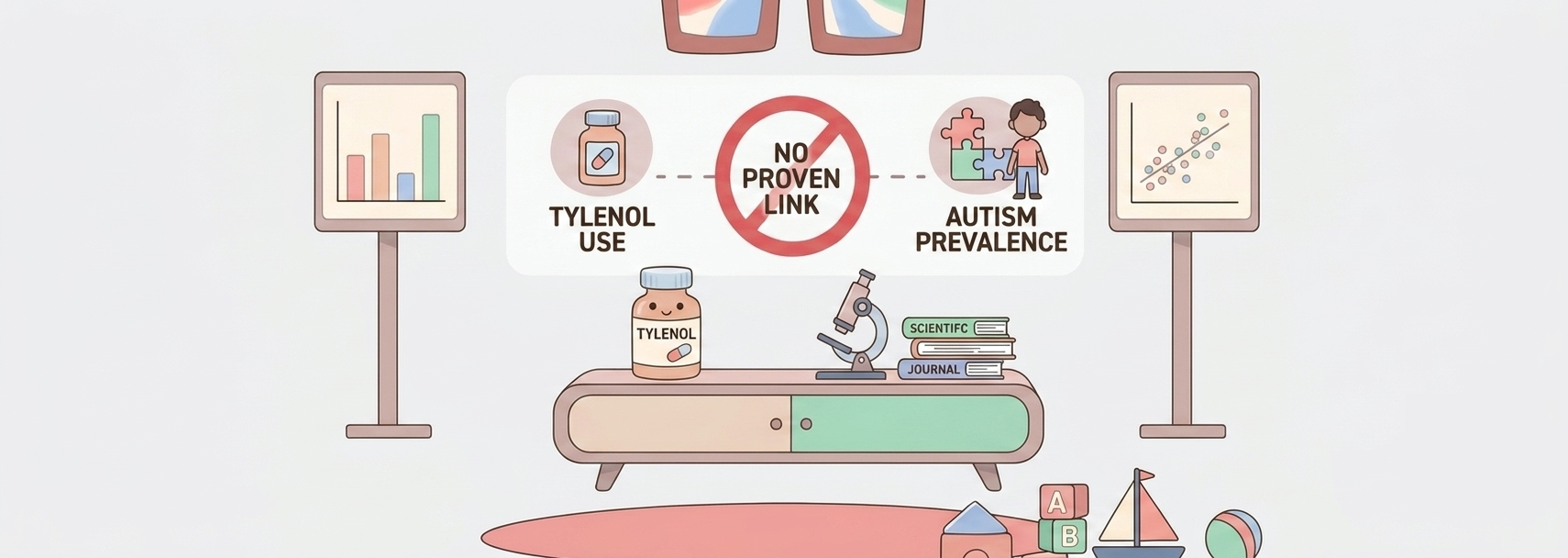
One of the most recent claims circulating online suggests a direct link between Tylenol (Paracetamol/Acetaminophen) use during pregnancy and autism. This has left many expectant parents feeling afraid, guilty, and unsure of what to trust.
In our latest podcast episode, Therapix co-host and Clinical Specialist OT Banu Balaji sat down with Dr. Jay Venkatramen — Consultant Paediatrician in Child & Adolescent Psychiatry — to break this down with evidence, compassion, and clarity.
Association vs. Causation — Why It Matters
A core message from Dr. Jay was simple but essential:
Just because two things are linked doesn’t mean one causes the other.
Here’s the difference:
| Association | Two things appear connected, but one doesn’t necessarily cause the other. Example: People who own running shoes often have healthier hearts — not because the shoes prevent illness, but because the owners are more active. |
| Causation | One thing directly leads to another — proven through strong, repeated scientific evidence. Example: Smoking causes lung cancer. |
Some studies have shown a statistical association between paracetamol and developmental outcomes. But this is not proof of causation.
In fact, major medical bodies — including the American College of Obstetricians and Gynecologists (ACOG) — have confirmed that current claims about Tylenol causing autism are scientifically misleading.
The Real Risk: Withholding Safe Medication
Avoiding paracetamol during pregnancy because of misinformation can actually be dangerous.
✔ Paracetamol is one of the few safe medications during pregnancy to treat pain and fever.
✔ High maternal fever, if left untreated, can cause fetal distress and complications.
✔ Alternatives like Ibuprofen are unsafe later in pregnancy and can harm fetal circulation and kidneys.
The greater risk isn't Tylenol — it’s untreated fever, pain, and anxiety caused by misinformation.
So What Causes Autism?
Autism isn't caused by a single factor — and certainly not by one medication.
- ✔ It is multifactorial: genes, environment, and developmental conditions all play a role.
- ✔ There is a strong genetic link from both parents.
- ✔ Autism is not a disease — it's a neurodevelopmental difference.
- ✔ Many autistic individuals also experience ADHD, dyslexia, or sensory processing differences.
A diagnosis is not an ending — it’s a starting point.
It helps us understand how a child experiences the world, so we can support them better.
A Message to Parents and Carers
Dr. Jay left listeners with three powerful reminders:
🌟 Your well-being matters.
You can’t pour from an empty cup — caring for yourself doesn’t make you selfish, it makes you strong.
🌟 Question what you read.
Not everything online is fact. Look for research, medical guidance, and trusted professionals.
🌟 Talk to your doctor.
If you're unsure or scared, speak to a healthcare provider who practices evidence-based medicine — not the internet.